A performance tracker for people who log everything — meals, lifts, lab results and protocols — kept
in one place and read by an AI coach that sees all of it before it answers.
Everything in one place
Numbers like these usually live in separate apps that can't see each other: a calorie counter, a lifting log,
a folder of lab PDFs. BodyTrack:AI keeps every input and output under one account, so any of it can be read
against the rest.
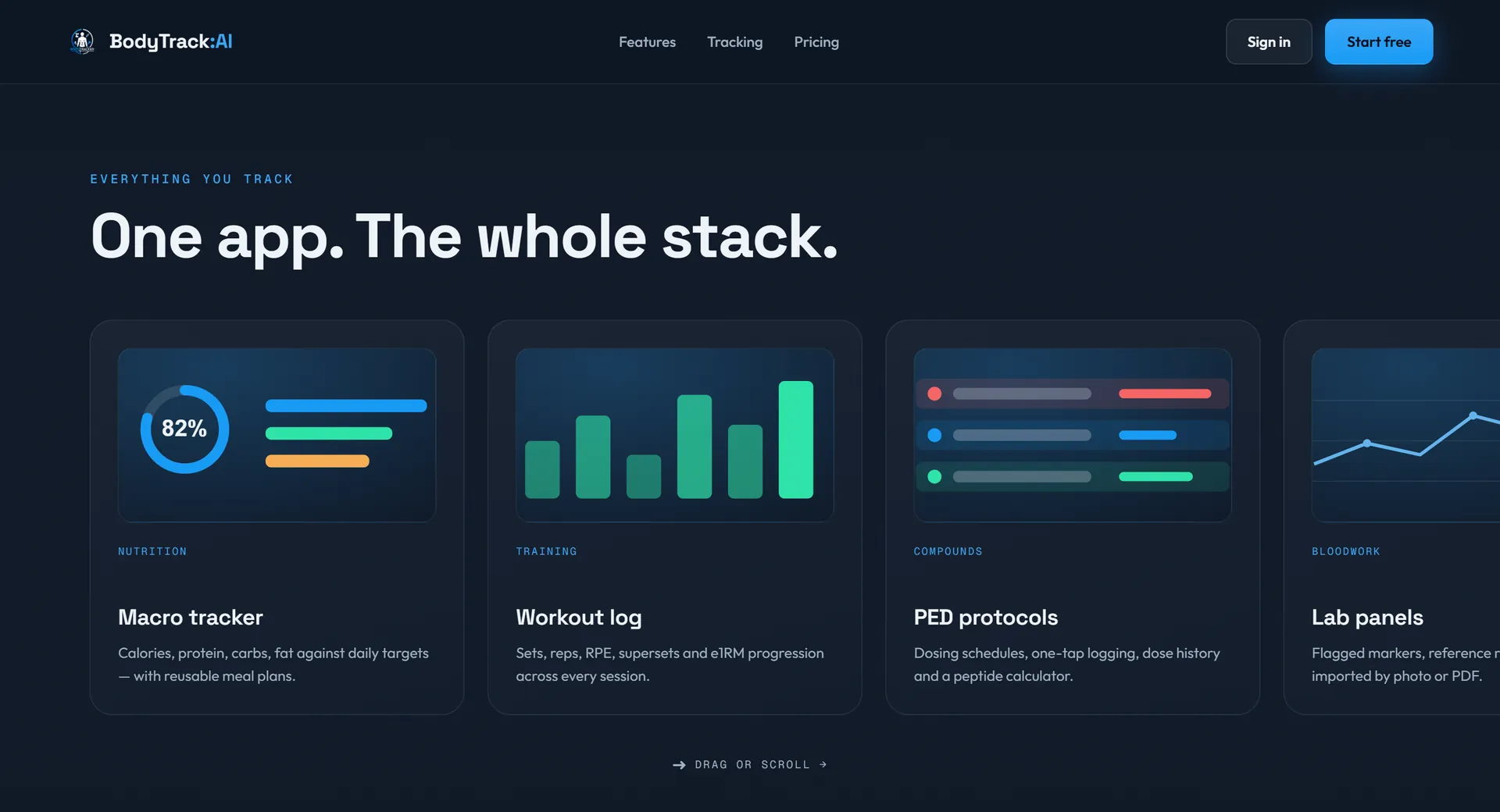
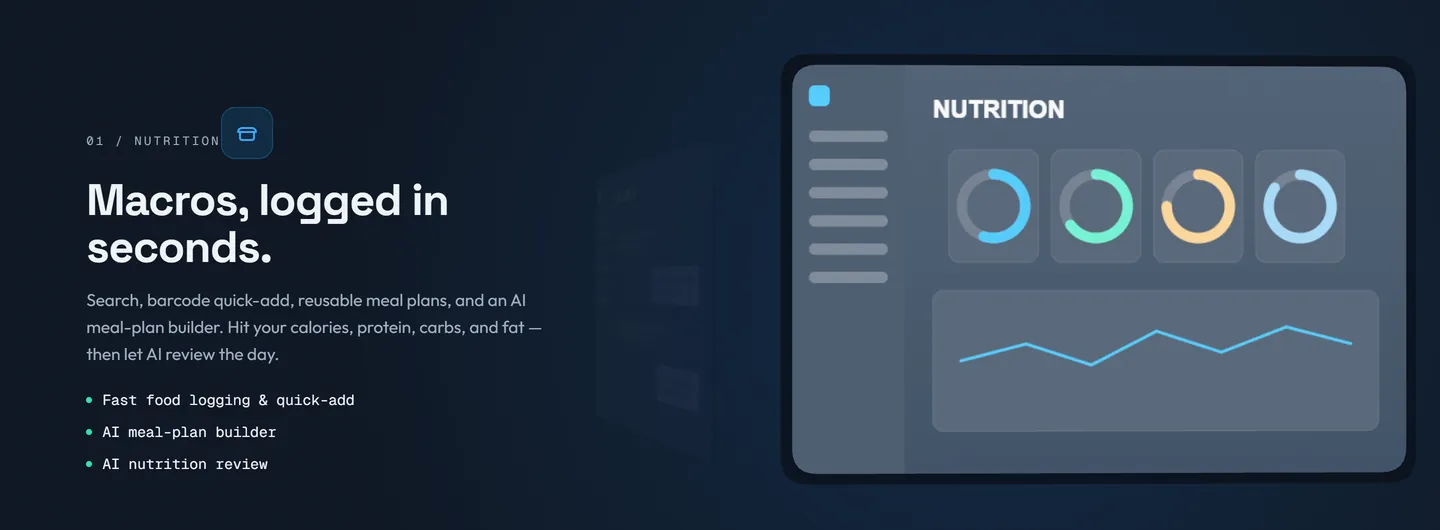
Nutrition. A food log against daily calorie and macro targets, a food catalog, quick-add and
reusable meal plans, an AI meal-plan generator, and an AI review of the day's eating.
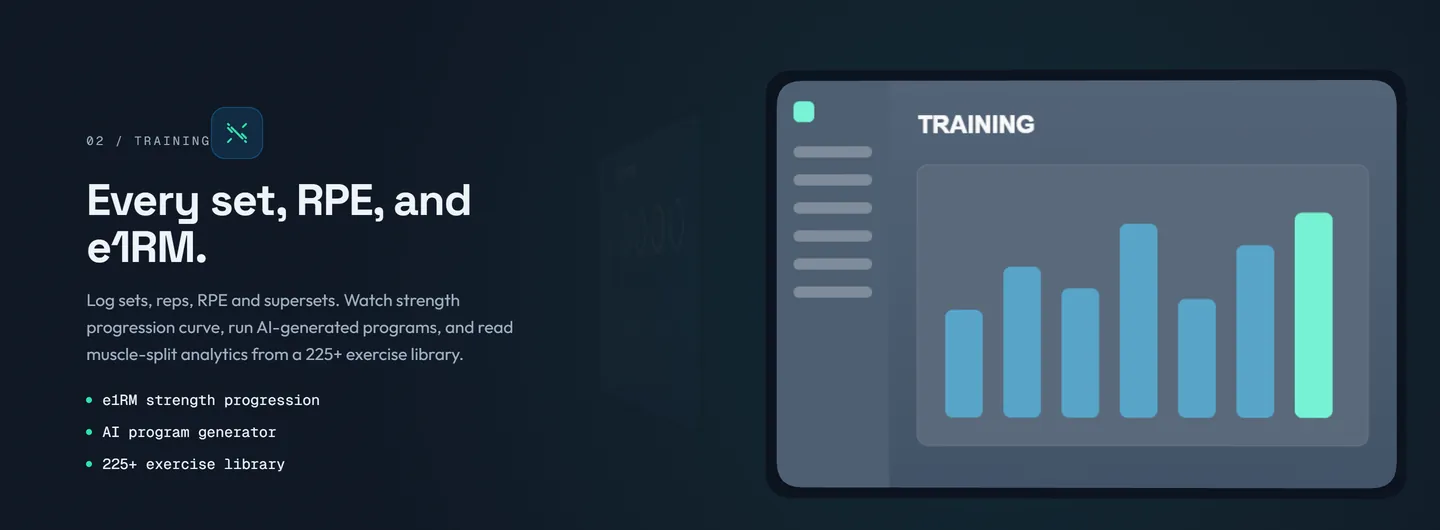
Training. Sets, reps, RPE and supersets, an exercise library, e1RM strength progression, and
AI-generated workouts.
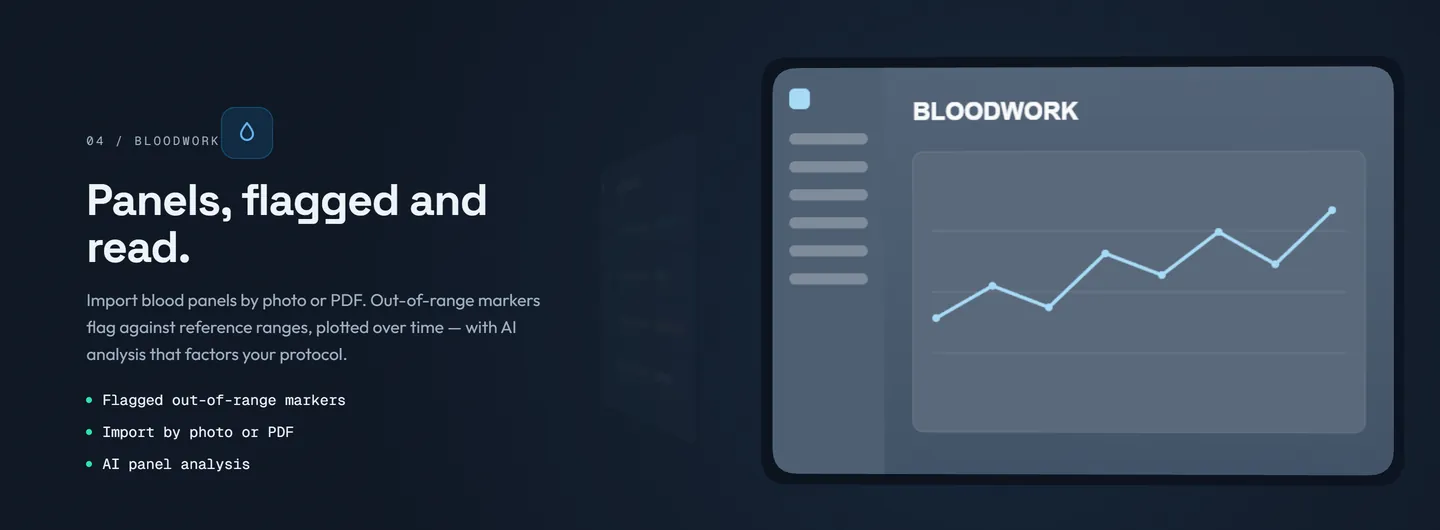
Bloodwork. Lab reports imported from a photo or a PDF, each marker checked against its
reference range and charted over time, and an AI read of the whole panel.
Protocols. Dosing schedules with one-tap dose logs, a peptide reconstitution calculator, and
blood-concentration curves worked out from each compound's half-life.
Body and recovery. Weight, measurements on a 3D body model, blood pressure, blood sugar,
sleep, hydration, steps and regular check-ins.
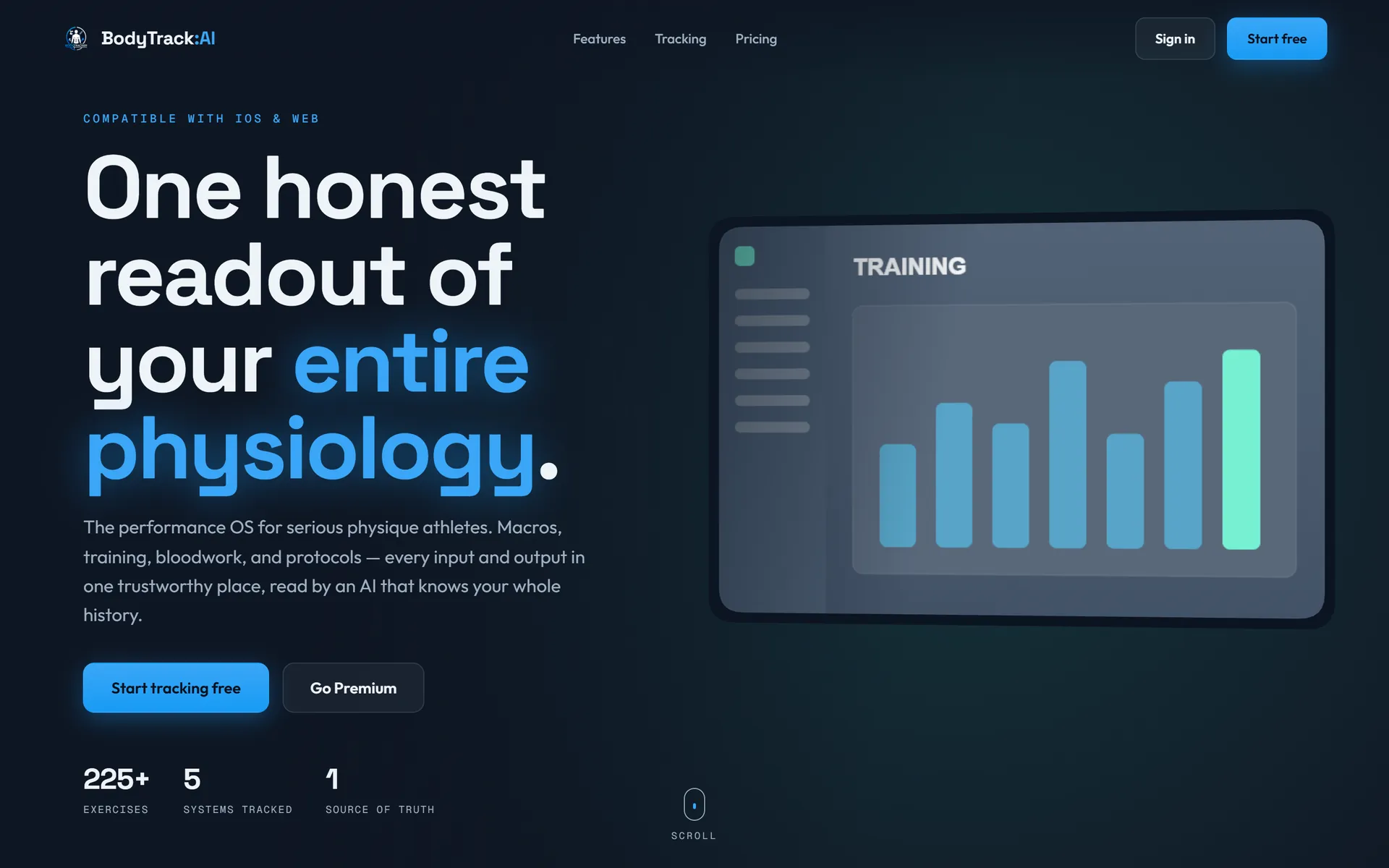
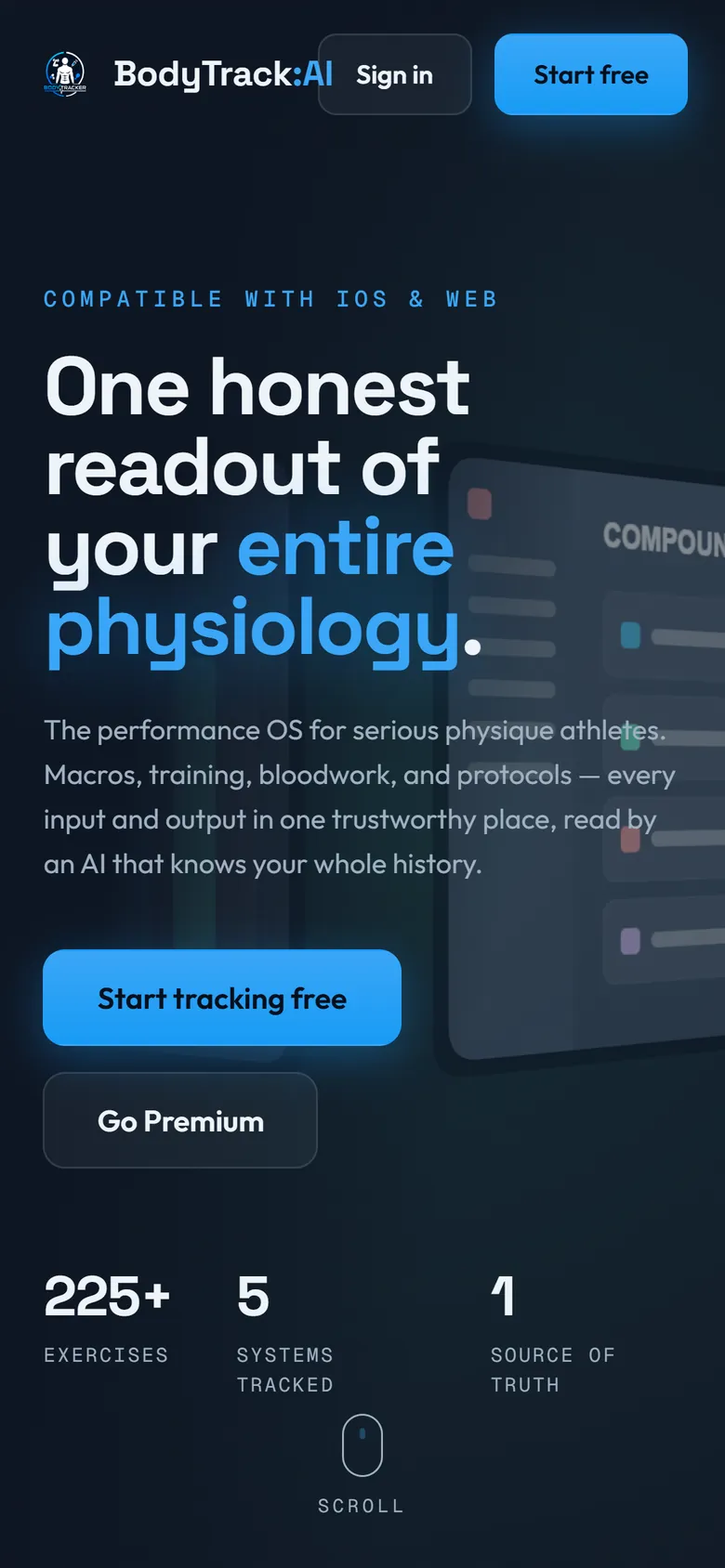
The landing page's run-down of the whole stack.
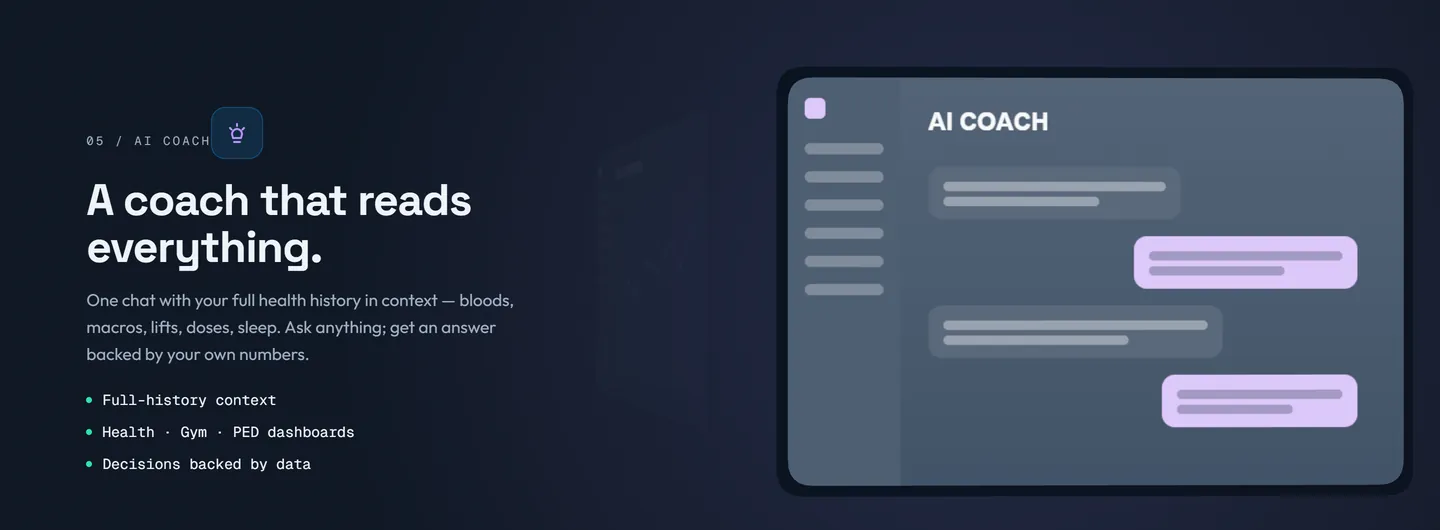
Its tour of the features: nutrition, training, bloodwork and the coach.
The coach
Every AI feature runs on the server, through Anthropic's API. Before the coach answers, it gathers the
signed-in user's own logs into its context, so its advice comes from their numbers rather than from averages.
Lab reports go to a vision model that is told to transcribe every marker exactly as printed and to invent
nothing it can't read. Without an API key, the AI features say they aren't set up yet, and everything else
keeps working.
One codebase, web and iOS
The web app is a server-rendered Next.js app. Rather than rewrite it in React Native, Capacitor wraps the
deployed app in a native iOS shell: the same code and the same interface on both, one place to ship a feature,
and a signed binary that can go to the App Store. Both talk to the same Supabase backend, so an account and its
data follow you from one to the other. On a phone, it can lock behind Face ID, and it tells you when it's
offline.
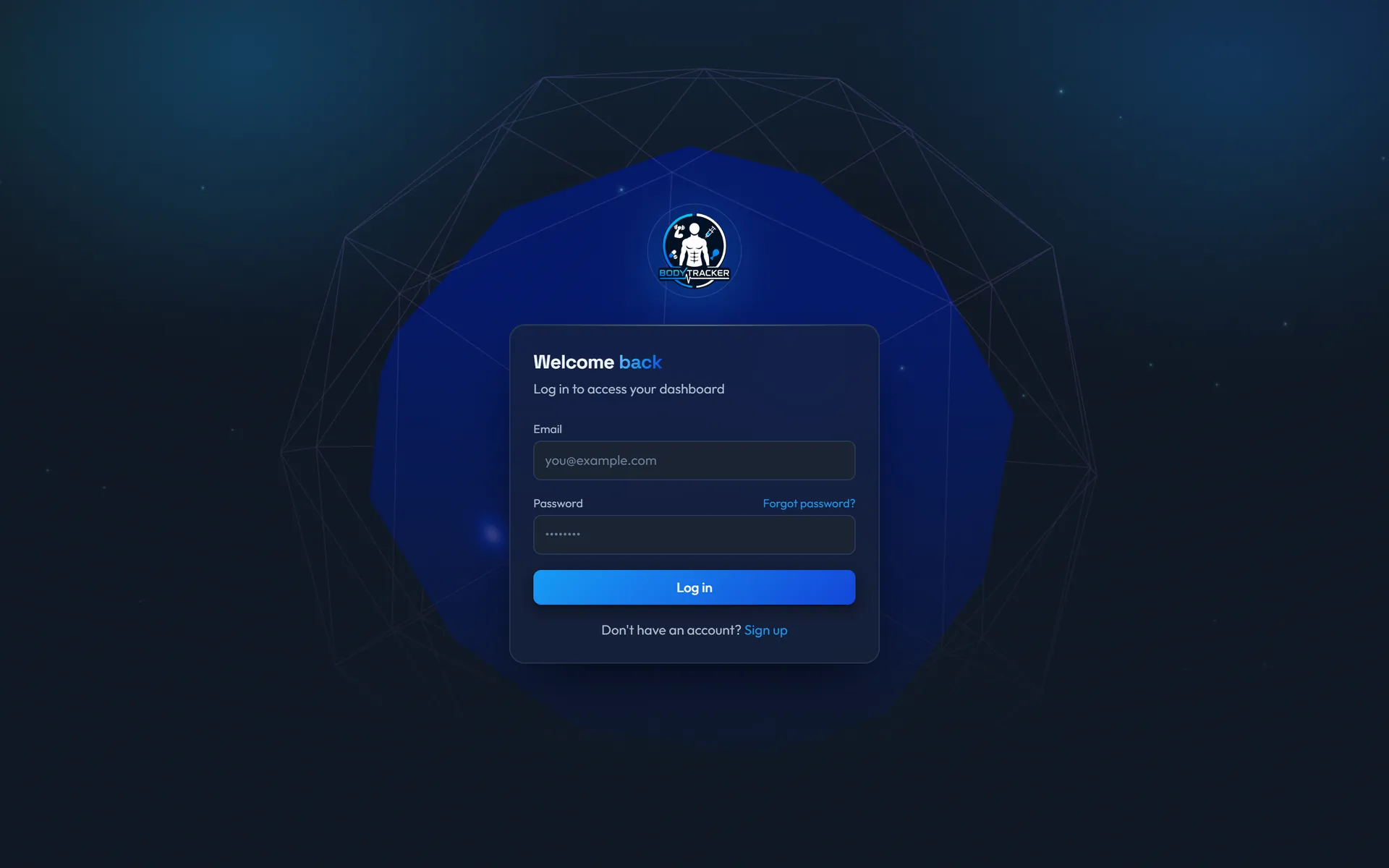
The landing page on a phone, and the login page.
Private by design
Accounts run on Supabase Auth, with email verification and password resets, and anyone signed out is sent to
the login page. Every table that holds someone's data has row-level security, auth.uid() = user_id,
so each person can only read and write their own rows — enforced by the database, not just the interface.
API routes check the user again and validate what they're sent, the admin and AI keys never reach the browser,
and deleting an account, which Apple requires, removes all of its data with it.
Vital Signal
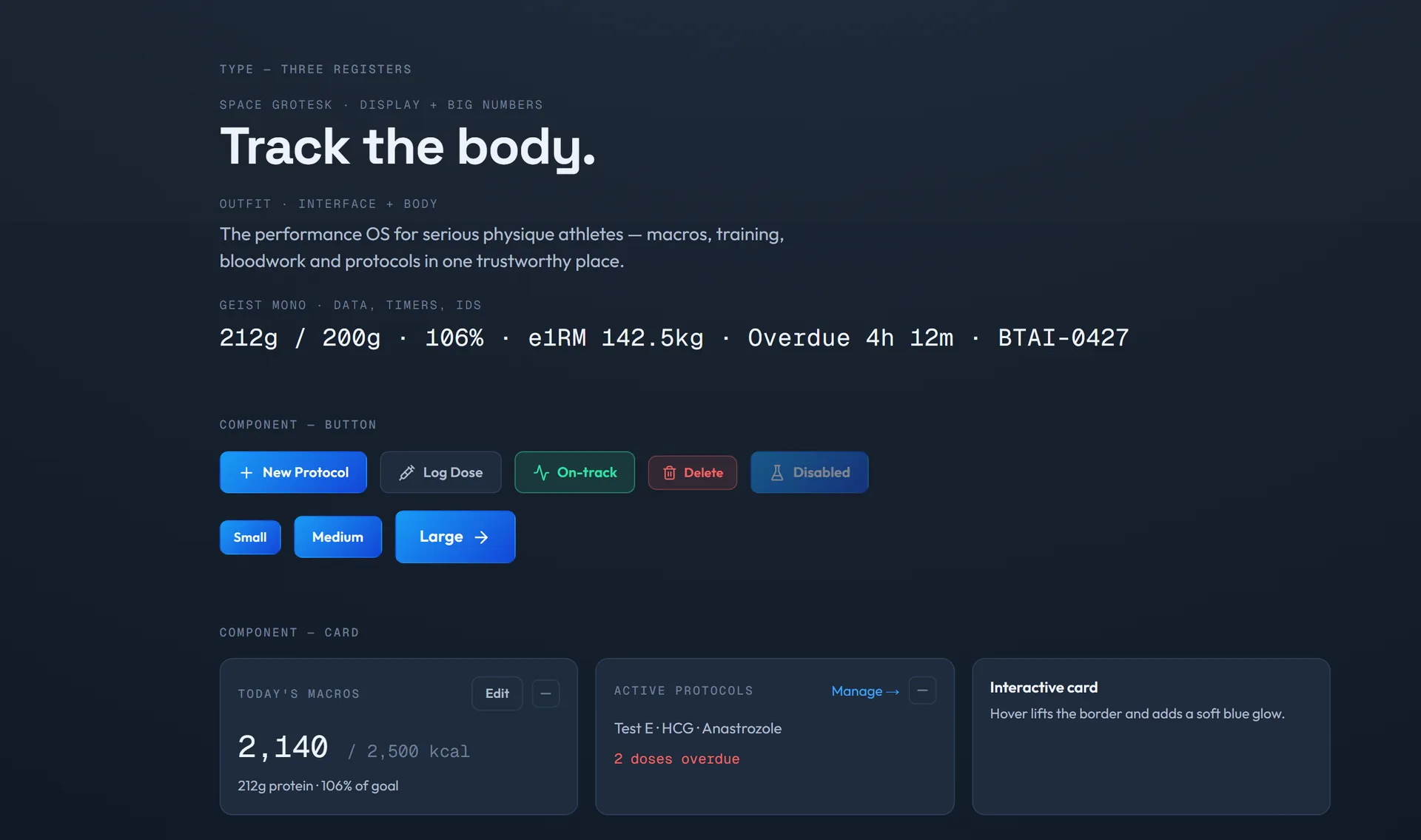
The interface runs on its own design system, Vital Signal: Space Grotesk for headings, Outfit for the
interface and Geist Mono for numbers, on a palette of pulse blue, deep royal and vital mint. A design-system
page renders its tokens and first components side by side, to check them before the rest of the system is
built.
The design-system page: its type, its buttons and its first cards.